Wednesday, March 3, 2021

Blackstraction in Context


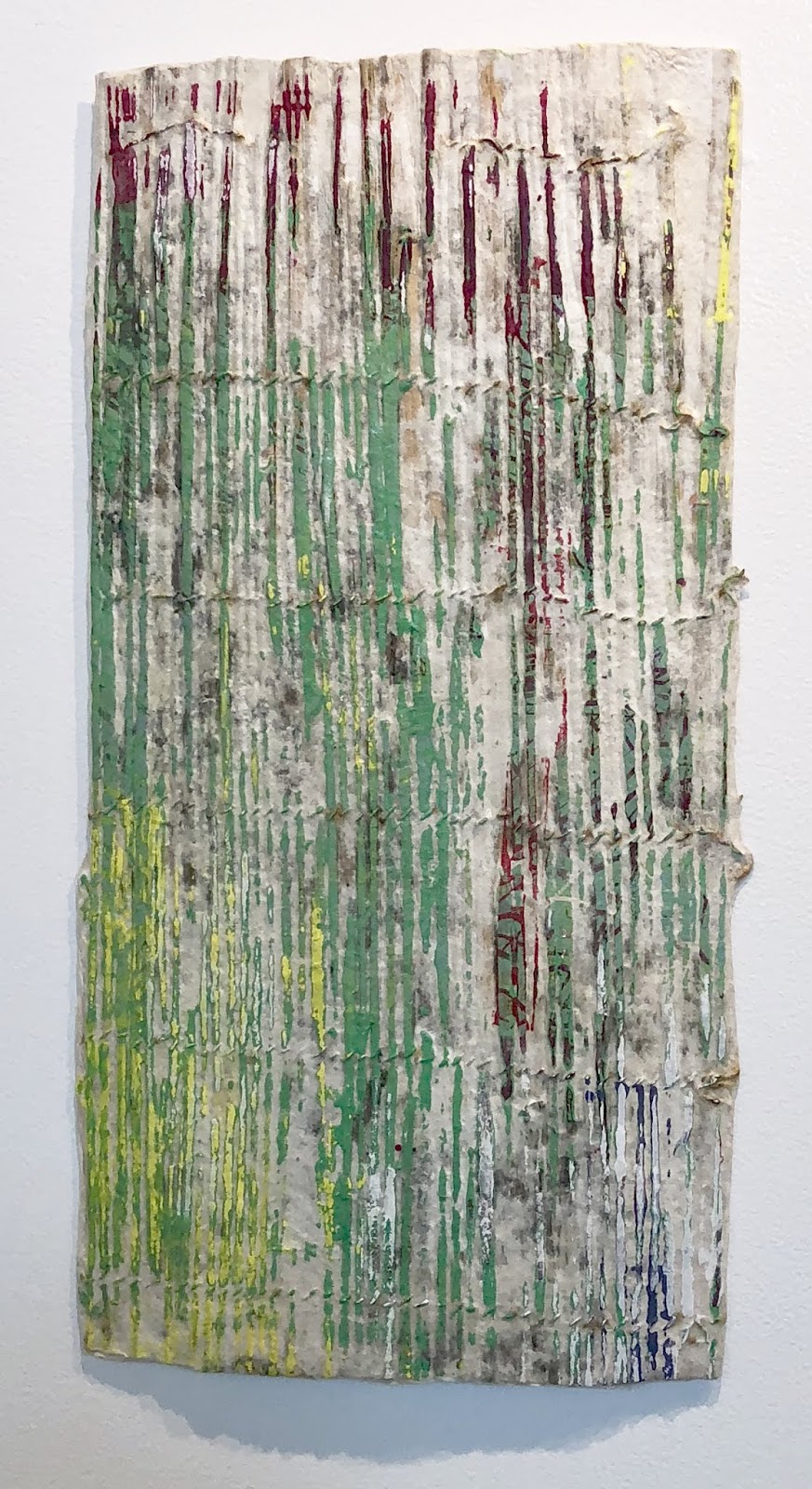
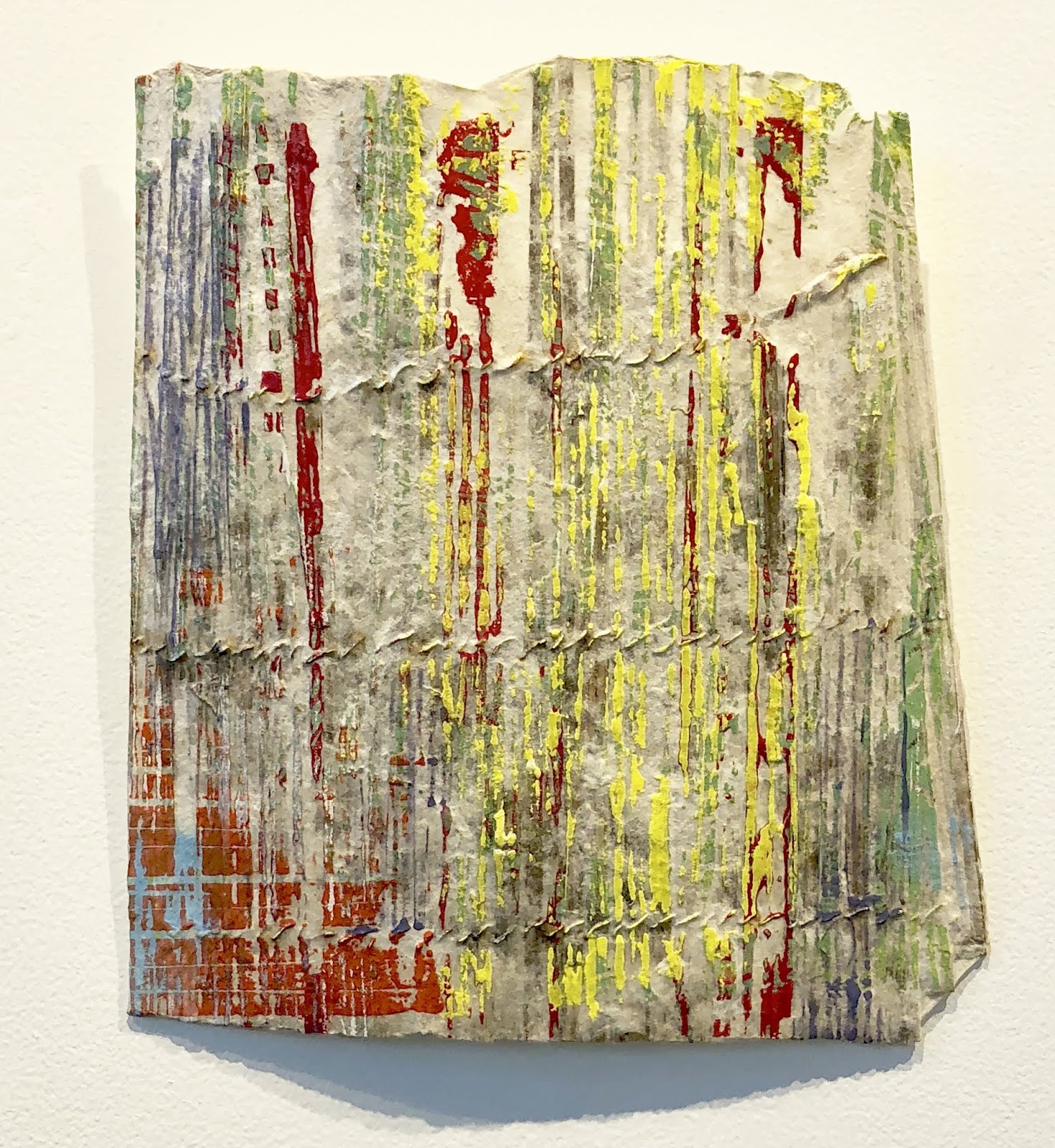
When I coined the term blackstraction to refer to the objectification of painting in 2000, it was the result of research that I began in 1980 as a creative writer working as an artists’ model at the Corcoran School of Art. Looking at language as art led me to see poetry as the original formalist abstract art because all the poem’s meaning is based on relationships created with words contained in the body of the work.

Experimenting with painting and drawing to study abstract art as language, I started looking at all kinds of paintings to understand how the materials are used. I began reading about what painting is, what art is and how the art world evolves. I found styles of painting correspond to the introduction of studio methodology.

How and what artists painted began to change in the mid-19th century after invention of the photograph. Until then, paintings were two dimensional and mostly flat with impasto used to emphasize details. In the industrial age, artists began to use it to alter how we see and perceive images. Impressionism, Fauvism, Expressionism and Constructivism, all inching away from painting realistically, developed during this time.

Late in the 19th century Modernism arrived. European exposure to African and Oceanographic art opened the way for Cubism, Surrealism, DaDa, Bauhaus and other styles propelling painters fully into imaginary realms. Collage, assemblage and intellectual discourse join the techniques used.

The next important additions come after World War 2. Abstract Expressionism gives us all over painting, Art Brut common materials like fiber and non-traditional techniques like stitching, and Spatialism introduces three dimensionality. While the painting itself remains a flat two dimensional object, pouring, staining, scraping and cutting are now used by artists exploring what painting can be. Depth is incorporated into the picture plane. These three styles lay the foundation for Blackstractionsim.

In the 60s and 70s, artists expanding and delving deeper into abstraction used all the above techniques to experiment with both the image and how the image is constructed. Action Painting, Color Field, Op Art, Hard Edge and other styles followed the trail of expressionism. 

Spatialism led to shaped canvas, cloth alternatives to canvas, and dropping stretchers altogether. Relaxing the rigidity of the traditional painted rectangle ushers in Minimalism and Blackstractionism-- both dealing with the sculptural possibilities of painting. While Minimalists embraced design, industrial materials and commercial execution, Blackstractionists were focused on labor intensive experiments involving both aesthetic and physical properties of painting with depth.

Going into the 1980s, painting had become any and everything, including intellectual discourse. 

The Postmodern era that had been building since the 60s brought new art favoring installation, performance and new media stemming from developing technologies. Indeed, painting is declared dead, art becomes “contemporary” and really of the moment. By the end of the century referential discourse describing what artists are painting is more important than the style of painting executed. We arrive at zombie abstraction.

In the 1965 essay “Specific Objects,” Donald Judd unknowingly described blackstraction when he wrote, “The new work exceeds painting in plain power, but power isn’t the only consideration, though the difference between it and expression can’t be too great either… This work which is neither painting nor sculpture challenges both. It will have to be taken into account by new artists.”

Jack Whitten, one of many artists developing blackstraction, talked about his work in 1983 as “... a precise and continuous development of experimentations dealing with the possibilities of paint, using various processes towards defining a new spatial perception in painting…” Judd, one of the most well-known minimalists and a prolific and influential critic of his peers, consistently denied three-dimensional painting was a movement. Between 1959 and 1975 he did not once review the work of Whitten or Sam Gilliam or Al Loving or Joe Overstreet or Howardena Pindell who were his contemporaries in NY and exhibiting the work he talks about.

As Whitten noted in 1980, “Clement (Greenberg) would never accept the possibility of a Black man leading….” He spoke of one critic but it could have been the entire art industry then or now, as today that same industry seeks to add diversity by monetizing artists like Gilliam and Whitten without recognizing their contribution to the canon. 20 years into the 21st century, Stella is practically a household name for anyone interested in abstract art, while the effect of Sam Gilliam’s draped canvases has yet to be evaluated for the influence it exerted over all the work that follows.

I call this work blackstraction because I trace its beginnings to the European response to indigenous art and to confront the art world protocol of belittling, absorbing and erasing advances made in studio practice by and because of Black, outsider and other minority artists. Blackstraction provides a platform for discussion around the work artists executed in a way that acknowledges the full extent of their contribution which will ultimately direct the course of art because three-dimensional abstract painting remains basically unexplored.

blackstraction (blak-strak’ sh-n) n. 1. the objectification of abstract painting 2. A non-
representational transcendental work of art 
stressing formal internal relationships using African/Asian/American art practices at times employing craft techniques and three-dimensional presentation. blackstractionist n. An artist engaging therein... 

blackstraction (blak-strak’ sh-n) v. t. 1. to make markings with color on diverse surfaces that relate to each other and their environment in two and three dimensions. 2. Painting using depth as part of the picture plane    blackstractioned, blackstractioning

Blackstractionism (blak-strak’sh-niz-m) n. Fine Arts1. a style of emotive non-representational painting appearing in the US in mid- to late 20th century sometimes employing craft techniques and three-dimensional presentation.       2. theory and practice of transcendental three-dimensional painting


Thursday, November 5, 2020

The Blackstraction Timeline Project


October 25, 2020        BLACKSTRACTION at 20: Reflections

20 years ago I decided to join the word abstraction with the word black and to define it as a way of working. The studio talk above recounts how the term has been received over the years, clarifications I've made to make the term more precise, and introduces The Blackstraction Timeline Project which will show how the methodology evolved from the late forties through about 1990-- when 3 dimensional painting has firmly joined the language of abstraction. I'm researching from three perspectives and will talk about my findings as I progress. In September 2021, The Blackstraction Essay and Timeline will be available as Public Offering 2021. Below is the schedule of public studio talks on Facebook Live:

January 24, 2021        Blackstraction: how the painting is made 

April 25, 2021            Blackstraction: what the painting is made of

July 25, 2021              Blackstraction: how the painting is presented

September, 2021        PUBLIC OFFERING 2021
                                    Blackstraction Essay and Timeline 

You can support my research here:


Special thanks to Denaise Seals, videographer extraordinaire!   


Wednesday, December 4, 2019

Blackstraction: Putting 0ut the Word

Blackstraction turns 20 this year... It was introduced as a way of working in my talk for a solo exhibition at Parish Gallery/Georgetown in Washington, DC on October 25, 2000. In 2011 I made clarifying changes to the theory and finalized the definition with the primary citation "the objectification of painting."

blackstraction (blak-strak'sh-n) n.
1. the objectification of painting 2. an emotive non-representational work of art stressing formal internal relationships using African/American/Asian art practices at times employing craft techniques and three dimensional presentation   blackstractionist n. an artist engaging therein
blackstraction (blak-strak'sh-n) v.t.
to make markings with color on diverse surfaces that relate to each other and their environment in two and three dimensions     blackstractioned, blackstractioning 
Blackstractionism (blak-strak'sh-niz-m) n. Fine Arts
1. a style of non-representational painting which appeared in the United States in the late 20th century employing craft techniques and three dimensional presentation 2. theory and practice of blackstraction 

I define blackstraction as a way of working. What differentiates it from other ways of working is that it was not a movement developed simultaneously by artists that were friends or colleagues working in the same time period but by individuals over a period of roughly 40 years, just after WW2 - 1990 or so. Lots of experimenting happened during this time in artists' studios, particularly during the Civil Rights and Black Arts Movement... 

The art world isms that we know follow the trajectory of the western art market.  Artists like Sam Gilliam, Jack Whitten and Elizabeth Murray that are coming to the attention of the market now objectified painting making it three dimensional. This is BLACKSTRACTION: if art history does repeat and Modernism is a model, its Asian and African aesthetics will be obscured as these ways of working become foundation of what will be called new (western) art styles. 
Put the word out: it's called Blackstraction. 


This short film was produced in 2010 by Rachel Lynn Smith as part of The Community Voice Project, a collaboration between American University and The Smithsonian Anacostia Community Museum. The series was created as a project for her students in a class combining cultural anthropology and film studies by Professor Nina Shapiro-Perl, now retired.

Friday, November 29, 2019

Intersectional Painting 2017-2019

using quilt batting before The Paducah Project*:
 

 After The Paducah Project*


October of 2018
carte blanche 56" x 84" commission based on the work above for the DC Public Library
Capitol View Branch Childrens' Room
installed March, 2019:


carte blanche so from a selection of three:


studio exercise (weaving the remanants):
Small Fomat Grid Paintings 1 and 2

 
Large Format Grid Paintings 1 - 7


for looking for a narrative between weaving and painting using 3 dimensions
(on-going)


Exhibition:

Abstract Realities: Through the Eyes of Black Women

Bowie State University Gallery October 8 - November 5, 2019
with Adjoa Bowens, Gail Shaw-Clemons and Aziza Claudia Gibson-Hunter
curated by Alexis Dixon


Monday, September 2, 2019

Public Offering 2019: Eradicate Cultural Sharecropping

Now is a great time to be an independent artist!

Society is in a chaotic moment of redress and the "art world" is reshaping. Its okay for artists to self-promote and self-represent, thanks to the internet. Artists are finally in position to gain a modicum of control over who gets to be an artist and who gets to define fine art.

It is a popular fiction that success as a fine artist can only be found participating in the traditional art market with its well documented history of sexism, misogyny, racism, ageism and exploitation for profit by everyone promoting the artist (except the artist) with few exceptions.

That many artists practice outside these parameters and are consistently making a comfortable living making new work needs more visibility. Many are not rich nor famous yet sustain a successful practice producing and selling work that for whatever reason fails to resonate with the "art world."
The art world we read about in mainstream media and that we talk about when we talk about buying and selling art is exclusive to a very wealthy group of people. Great monetary values don't always equal great cultural value except to this very wealthy group buying and selling what THEY DECIDE is art. In the past year, that included a questionable Leonardo da Vinci and the first AI-generated painting auctioned at Christies for more than $400,000!

Dialogues about cultural diversity, inclusion and an expanding art public suggest this needs to change. Contemporary arts marketing acknowledges new potential buyers outside this realm and targets a more diverse base with disposable income to introduce to collecting. This can happen
when galleries representing artists and artists representing themselves sell in the same venue.

One such current venture is SuperFine.World, a national network of art fairs featuring galleries, artists representing themselves, and a cap on pricing. SuperFine fairs target the public at large and are set to become the first "recognized"  professional fine art venues where anyone can buy art from the artist.

Precedents go back at least to the early 2000's and include Art Off the Main, organized by Loris Crawford who presented international artists and galleries of African descent at the Puck Building in NYC before its' restoration. 

This open engagement with the public permits artists to build a constituency of supporters that will follow the artist's career with interest and insight into the way the artist practices art. This consistent exposure over time gives the public agency to decide who can be an artist and what fine art is in this day and age-- the same way it has been decided exclusively by the art world in the past.

Until recently, artists representing themselves were by and large dismissed as decorative and amateur. That's changing. Outreach by museums in neighborhoods and schools has resulted in a bigger and growing art appreciating public. If an artist' goal is to sustain practice through the sale of objects, this is a demographic to seek out and cultivate.

Independent artists and their patrons have an opportunity to be part of a burgeoning movement that will bring new meaning to the words "Public Artists." We live in an age when the course of art and culture does not have to reflect the tastes and opinions of the very wealthy.

Eradicate Cultural Sharecropping!

       Public Offering 2019             #BeOneOfThe1000              September 1-30, 2019


Friday, October 5, 2018

WhiteWashing @ Pyramid Atlantic Art Center

execution: May - August
exhibition: September 7 - October 13
(not pictured: "Happenstance" monoprints) 


artists' remarks september 7, 2018


Fencing Out Color #1 - 20 


      Almost Human


Wednesday, October 11, 2017

Straight Up Feudal

Straight Up Feudal


[we find ourselves]
        clueless
in the 2017 Middle Ages

1%er's and their
corporations are the
ruling class
the ceo's and merchants
still have money
[where] the rest were
made serf, dependent on
and needs must be grateful
to the corporation.

Remember Roland Tried To Tell 'Em
but the systematic dismantling
of America's pseudodemocracy
went unperceived in a
maelstrom of social
media and information
overload.
Now.
It doesn't matter.

history will call
this coup bloodless.
meanwhile, there is a lot of blood being shed.

#TakeAKnee